
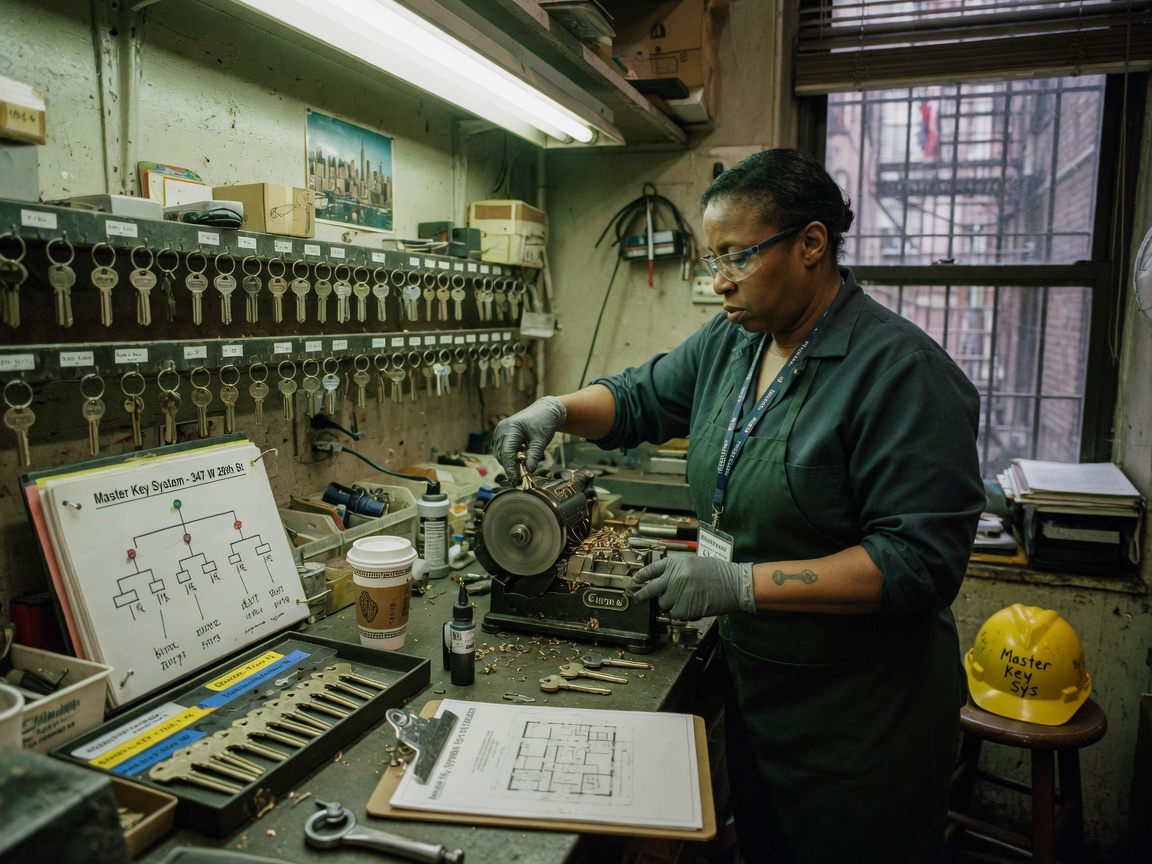
Master key system creation in Manhattan requires mapping the exact hierarchy of cylinders across multi-unit buildings common in the Upper East Side and near Central Park. Many structures date to the early 1900s with mixed pin and wafer locks that demand careful pinning charts to avoid cross-keying. Humid summers accelerate key wear while cold winter snaps cause metal contraction that can bind cylinders, so systems must account for seasonal expansion tolerances when selecting brass or nickel silver blanks.
In New York County the dense mix of residential walk-ups and ground-floor retail means a single master key often controls both tenant doors and shared utility rooms. We measure each cylinder depth on site rather than relying on floor plans because renovations in buildings around Times Square frequently alter original hardware. This prevents the common failure where a grand master opens a neighboring unit after a re-pinning job in adjacent Bronx or Brooklyn properties with similar Schlage or Medeco cores.
High-rise service calls near the Empire State Building often involve restricted keyways that require factory authorization before any master system can be expanded. We document every change pin and master wafer on a printed chart left with the building manager so future lock changes stay within the existing hierarchy without resetting the entire system.
Technician insight
In New York the thing that catches most people out with master key system creation is the mix of original 1920s cylinders and later replacements in the same Upper East Side building; cold winters make the older brass bind if the pinning chart does not allow for contraction, so we always test keys after a freeze.
Upper East Side walk-up master system
A six-unit pre-war building near Central Park had mismatched keys after several tenant changes. We mapped the cylinders, found two different keyways, and created a new three-level master system that let the manager open every unit while each tenant kept a unique key. The system held through the winter without binding.
Master Key System Creation Services We Offer
✓Residential Master Key Systems
Create a single master key that opens all units in Manhattan walk-ups while giving each tenant a unique change key for privacy.
✓Commercial Master Key Systems
Design key hierarchies for ground-floor retail and office spaces near Times Square so managers control multiple doors without carrying separate keys.
✓Apartment Building Rekeying
Re-pin existing cylinders in Upper East Side pre-war buildings to integrate new tenants into the current master system without replacing hardware.
✓High-Security Master Key Integration
Add restricted keyways and high-security cylinders to existing master systems in New York County commercial properties while preserving the original hierarchy.
✓Emergency Master Key Overrides
Install temporary override cylinders for property managers needing immediate access during lockouts in buildings around Central Park and the Bronx border.
Master Key System Creation Cost in New York
| Service | Typical Range | What Affects It |
|---|---|---|
| Small residential system (under 10 cylinders) | $450–$850 | Price rises with restricted keyways common in pre-war Upper East Side buildings. |
| Commercial system (10–25 cylinders) | $900–$1800 | Higher when integrating Medeco or other high-security cylinders near Times Square. |
| Apartment building expansion | $300–$600 | Depends on how many additional floors are added to an existing master system. |
Ranges are typical for New York and confirmed with an exact written quote before any work starts.
How it works
- 1
Site Survey
Visit the Manhattan property to record every cylinder type, door function, and existing keyway before any pinning work begins.
- 2
Hierarchy Design
Map the master levels on paper so tenant keys, floor masters, and building grand masters align with New York County building access needs.
- 3
Cylinder Pinning
Pin each cylinder on site using the approved chart while accounting for winter contraction that affects older brass locks in Upper East Side buildings.
- 4
Key Cutting and Testing
Cut change keys, sub-masters, and grand masters then test every combination across multiple doors before leaving the job.
- 5
Documentation Handover
Provide the printed pinning chart and spare blanks so future changes in Brooklyn or Bronx locations stay compatible.
Pricing
Pricing varies by number of cylinders and keyway type; most Manhattan jobs fall in the mid to upper range due to older hardware.